What Lead Management Really Means for Modern Sales Teams
3 min read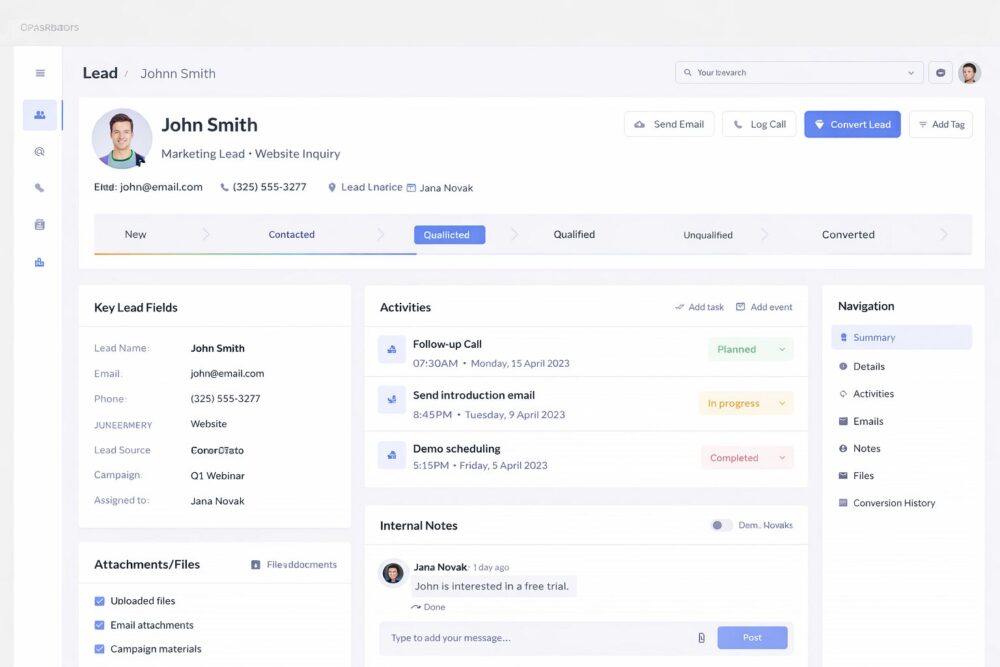
Lead management is often seen as a straightforward sales task: capture leads, follow up, close deals. In reality, it is one of the first processes that starts to fail as teams grow and lead volume increases.
Modern sales teams receive leads from many sources — websites, contact forms, email inquiries, marketing campaigns, referrals, and external systems. Without a clear structure, these leads quickly become scattered across inboxes, spreadsheets, and disconnected tools, making them difficult to track and manage effectively.
Lead management is not about collecting more leads. It is about turning interest into structured, sales-ready opportunities.
Why Lead Management Breaks at Scale
In small teams, manual lead handling often works. A shared inbox or a simple CRM setup may feel sufficient when lead volume is low. However, as inbound activity grows, cracks begin to show.
Common problems include unclear ownership, slow response times, and a lack of visibility into where leads come from or what should happen next. Context is often lost between marketing and sales, and follow-ups depend more on individual effort than on a reliable process.
These issues are rarely caused by poor sales performance. More often, they result from fragmented systems and missing workflows.
What Effective Lead Management Should Do
A strong lead management process should simplify work, not add complexity. At a minimum, it should clearly answer four questions for every lead:
-
Where did this lead come from?
-
Who is responsible for it?
-
What is the next step?
-
Is it ready for the sales pipeline?
When these questions are answered consistently, teams spend less time organizing data and more time engaging with potential customers.
From Lead Capture to Sales Pipeline — Without Losing Context
Effective lead management starts at the moment a lead is created. Leads should be captured automatically from all relevant touchpoints and enter a centralized system where information is structured and immediately usable.
As leads are qualified, ownership, communication history, and activity data should remain intact. When a lead becomes sales-ready, it should move smoothly into the sales pipeline without re-entering data or rebuilding context.
This continuity is essential for scalable sales operations.
Lead Management as a Core CRM Workflow
For growing organizations, lead management works best when it is built directly into the CRM rather than handled across separate tools.
Some CRM platforms, including Defalto, treat lead management as a core workflow. Leads are captured directly into the system from web forms, emails, or integrations, then assigned and qualified within the same environment.
This approach improves response times, reduces manual handling, and provides better visibility across the sales process.
Clarity Over Volume
Successful lead management is not about maximizing lead volume. It is about handling the right leads with clarity and consistency.
When teams have clear ownership, fast assignment, and full context from the first interaction, they are better positioned to build trust and convert opportunities. As businesses scale, this clarity becomes a key factor in sustainable growth.